In the fourth century, a monk named Evagrius Ponticus sat in the Egyptian desert and catalogued the eight logismoi - the thought patterns that assail the mind during prayer. One of them he called merimna: anxious preoccupation with the future. He described it with clinical precision: the mind spinning scenarios, rehearsing catastrophes, unable to rest in the present moment because it is too busy preparing for threats that have not yet arrived.
We call this generalized anxiety disorder. Evagrius did not have the diagnostic label. But he had the cure.
The Jesus Prayer
The hesychast tradition of the Eastern Church developed a practice that is, in my clinical opinion, one of the most effective anxiety interventions ever devised. It is called the Jesus Prayer: "Lord Jesus Christ, Son of God, have mercy on me, a sinner."
The prayer is synchronized with the breath. On the inhale: "Lord Jesus Christ, Son of God." On the exhale: "Have mercy on me, a sinner." Repeated slowly, rhythmically, hundreds of times, until the prayer descends from the mind into the heart - from conscious effort into automatic rhythm.
Neurologically, the rhythmic repetition activates the parasympathetic nervous system - the body's "rest and digest" mode. The breath synchronization regulates the vagus nerve, which controls heart rate variability and is directly involved in the stress response. The simple, repetitive content gives the mind something to do other than spin, effectively interrupting the cycle of anxious rumination.
The monks of Mount Athos have been doing this for a thousand years. They did not need a clinical trial to know it worked. They watched it transform fearful men into peaceful ones.
How to Practice
You do not need to be Orthodox to practice the Jesus Prayer, nor do you need to understand the theology. Here is how to begin:
Sit quietly. Close your eyes. Begin repeating the prayer slowly, coordinating with your breath. Do not force concentration. When your mind wanders - and it will - notice where it went, and gently return to the prayer. No judgment. No frustration. Just return.
Start with ten minutes. Work up to twenty. The goal is to give your mind a resting place, not to empty it. Anxiety spins because the mind has no anchor. The Jesus Prayer provides one.
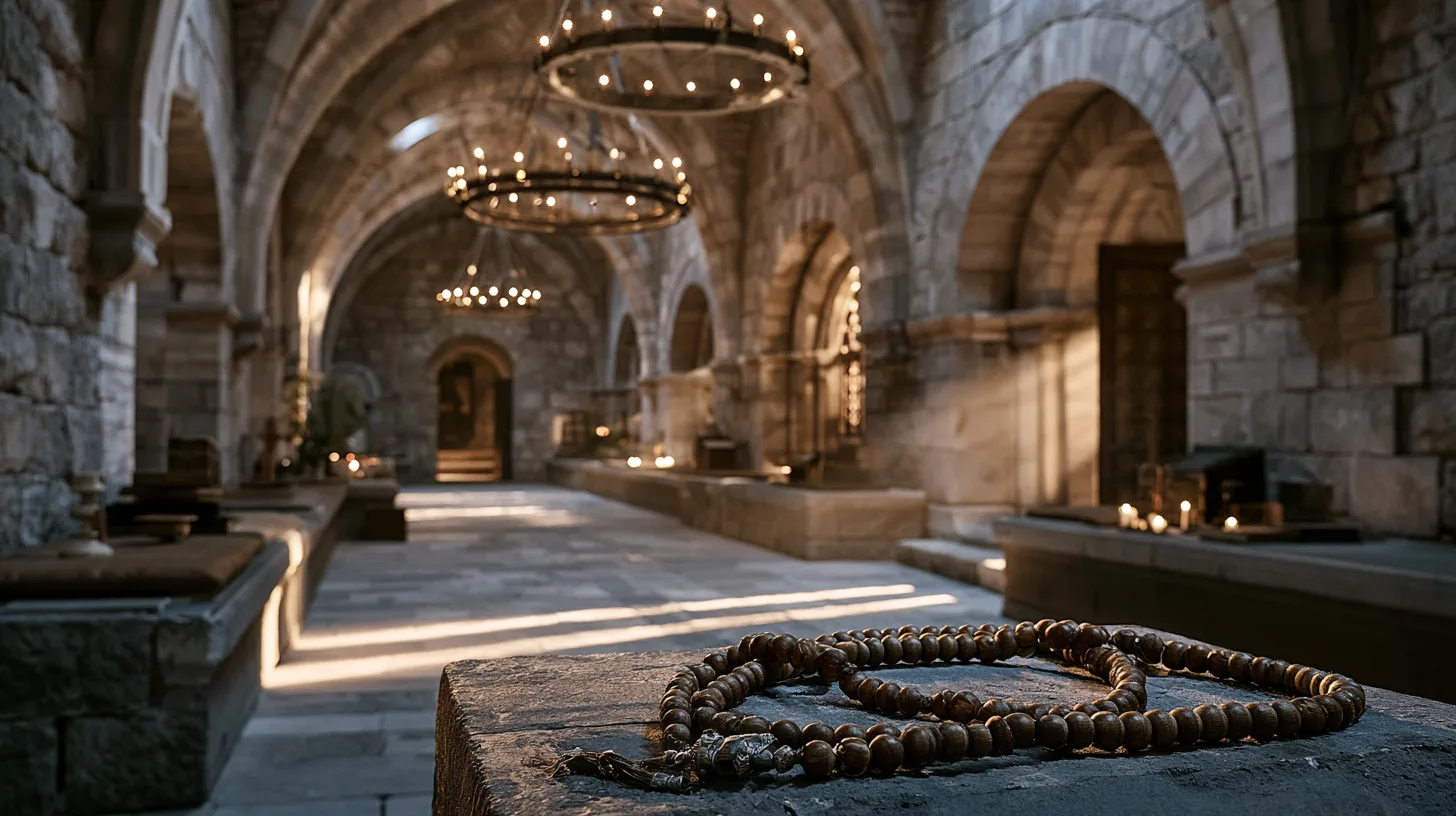
Some people find it helpful to use a prayer rope - a knotted cord, similar to a rosary, that gives the hands something to do while the mind prays. The physical tactile sensation adds another layer of grounding.
What You Will Notice
At first, you will notice how noisy your mind is. This is awareness, not a sign of failure - and awareness is the first step toward freedom. The Fathers called this nepsis: watchfulness. You are learning to observe your own thoughts rather than be enslaved by them.
Over time, you may notice a quiet settling: a change in your relationship to thought, not the absence of it. The anxious thoughts still come, but they pass through rather than taking up residence. You observe them the way you might observe clouds crossing a sky - acknowledging their presence without mistaking them for the sky itself.
The Fathers called this hesychia: sacred stillness. Not silence, exactly. More like the stillness at the center of a storm - the place where you are anchored, even while the winds blow.
That stillness is available to you. It has always been available. The prayer uncovers it, rather than creating it.