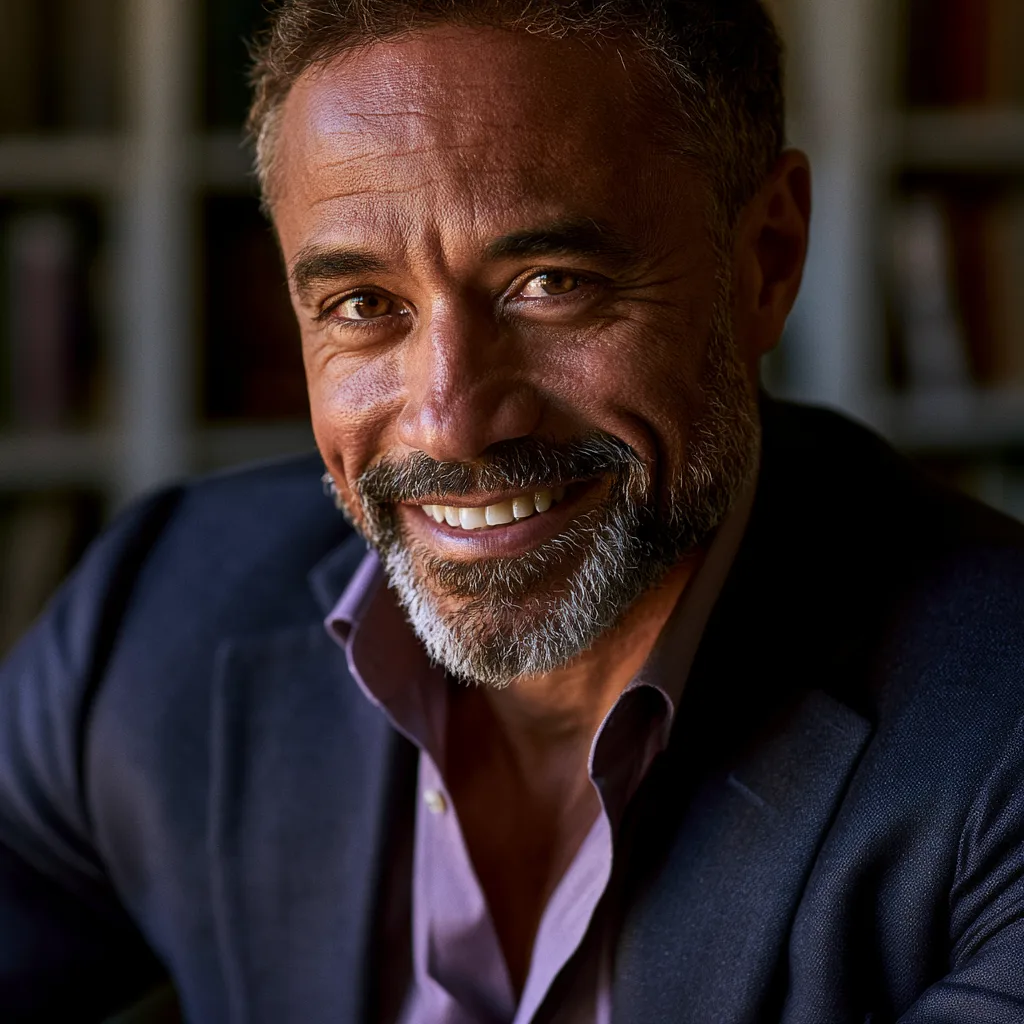
About Terrence
Terrence grew up in West Baltimore, the son of an AME pastor mother and a city bus driver father. His childhood was shaped by two forces: the prophetic tradition of the Black church and the daily reality of a neighborhood where poverty, addiction, and violence were the weather. His mother preached hope on Sunday and drove people to court hearings on Monday. She was his first model of what ministry actually looks like.
He joined the United Methodist Church in college - drawn to Wesley's insistence that personal holiness and social holiness are inseparable. You can't love God and ignore your neighbor's suffering. He was ordained, served two churches in Maryland, and then felt called to military chaplaincy. He deployed to Afghanistan twice, where he held worship services in FOBs, counseled soldiers coming apart, and learned that trauma doesn't care about theology.
In Kandahar, a 19-year-old soldier told him: "Chaplain, I know God forgives me. But I can't forgive myself." That sentence haunted Terrence. He realized that most of the people he counseled - soldiers, parishioners, activists - were trapped not by bad theology but by bad stories. Stories about who they were and what they deserved that had been written by trauma, shame, and systems that needed them to stay small.
He came home, completed a doctorate at Wesley Seminary and a counseling degree at GW, and trained in narrative therapy - the approach that treats the problem as the problem, not the person as the problem. He works now with activists, clergy, military veterans, and anyone carrying the particular exhaustion of caring too much for too long without caring for themselves.
He practices from an office near Howard University. He still preaches. He still marches. But he's learned that you can't pour from an empty cup, and that the most radical act of justice is sometimes sitting in a chair and letting someone help you.