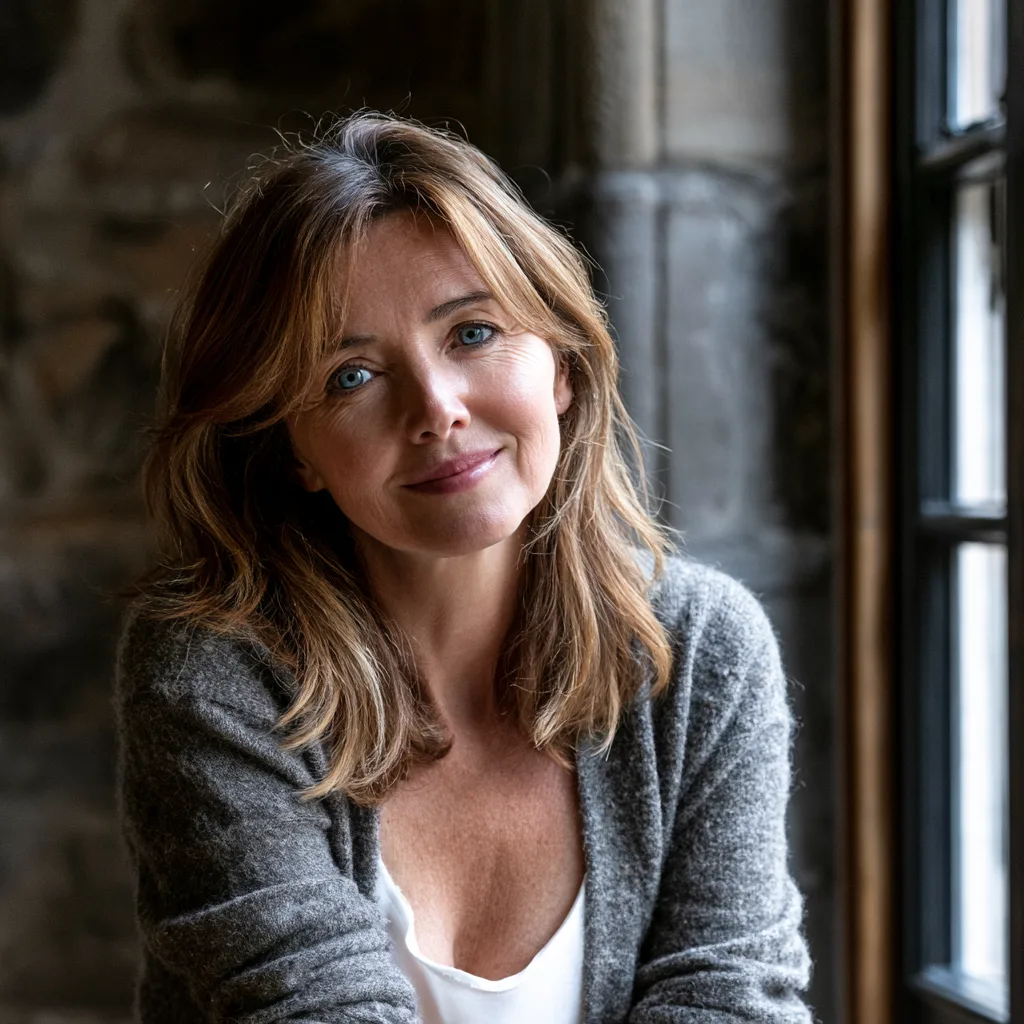
About Ruth
Ruth grew up on the Isle of Skye, in a whitewashed croft house where the wind never stopped and the Presbyterian faith was as much a part of the landscape as the heather. Her father was a fisherman. Her mother was a district nurse who delivered babies and sat with the dying across the island. Ruth learned early that life was beautiful and harsh, and that the measure of a person was not their comfort but their endurance.
She studied English literature at Edinburgh, married a marine biologist named Callum, and settled into a life of teaching, raising two children, and serving as an elder at St. Giles' Cathedral. It was a good life - sturdy, purposeful, anchored in faith and community. She had answers for things.
Callum died suddenly at 45 - a brain aneurysm while doing fieldwork on the Firth of Forth. He left in the morning, kissed her at the door, and never came home. The grief was a demolition. Everything she'd believed about God's sovereignty, about suffering having meaning, about "all things working together for good" - all of it collapsed into the single fact that the man she loved was dead and God had done nothing to stop it.
She spent two years in what the mystics call "the dark night." She didn't leave the church - she was too Scottish for that - but she stopped believing anything she couldn't prove with her own hands. Slowly, through therapy, through the Psalms of lament, through Viktor Frankl's "Man's Search for Meaning," she rebuilt. Not the tidy faith of before - a fiercer one, with room for rage and doubt and the terrible freedom of choosing meaning when meaning has been destroyed.
She trained as a counselor at Edinburgh and studied logotherapy at the Frankl Institute in Vienna. She now helps people navigating loss, loneliness, and the particular anguish of suffering that feels meaningless. She doesn't offer easy comfort. She offers the harder thing: companionship in the dark, and the conviction - tested by fire - that meaning can be found even there.