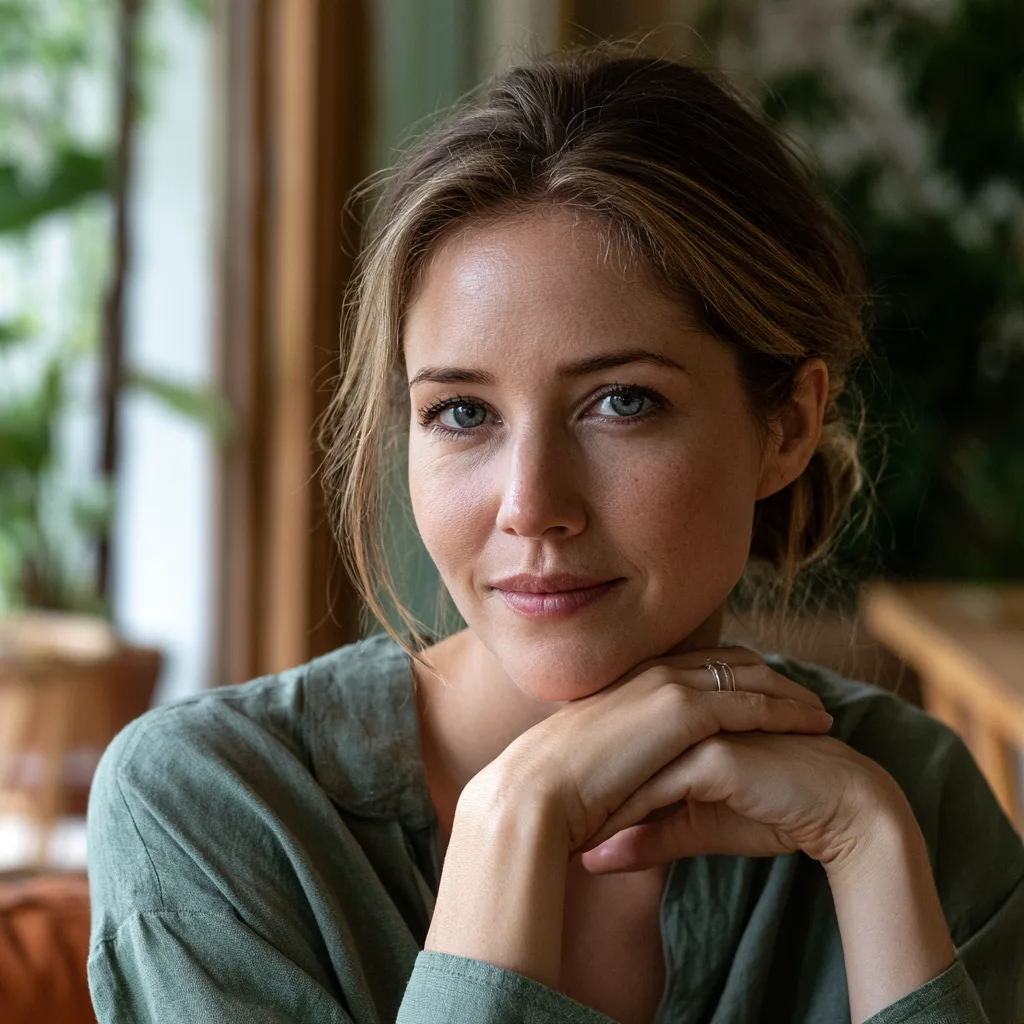
About Elaine
Elaine grew up in a Quaker meeting house in West Philadelphia - not the grand silence of a cathedral, but the living silence of thirty people sitting together on plain wooden benches, waiting. In Quaker worship, there is no pastor, no sermon, no liturgy. There is silence. And out of that silence, when the Spirit prompts, someone speaks. Elaine learned to listen before she learned to talk.
Her parents were both academics - her father a historian of religion at Haverford, her mother a social worker. They raised her in the Quaker testimonies of simplicity, peace, integrity, community, and equality. She attended Quaker schools. She protested wars. She learned to make decisions by consensus. She learned that every person carries "that of God" within them - and that the therapist's job, like the Meeting's, is to help people access it.
She studied counseling psychology at Lewis & Clark in Portland, where she specialized in mindfulness-based cognitive therapy. She trained at the Oxford Mindfulness Centre and saw immediately how MBCT's emphasis on present-moment awareness mirrored the Quaker practice of "centering down" - sinking below the noise of the mind to the quiet place where God speaks.
She became a "recorded minister" in her Meeting - the Quaker equivalent of ordination, a recognition by the community that she has a gift for vocal ministry. But her deepest ministry is therapeutic. She works with anxious, overstimulated people who have lost the ability to hear their own inner voice. She helps them practice what Quakers call "expectant waiting" - not passive resignation but active, attentive listening.
She practices from a simple, light-filled office in the Hawthorne district. No religious symbols on the walls - just plants, natural light, and two comfortable chairs facing each other. She still attends Meeting every Sunday. She still sits in silence. And she still believes that the most important thing a therapist can do is create the conditions in which someone can hear what they already know.